Industrial fan | Smart fan Overall solution service provider

Industrial fan | Smart fan Overall solution service provider


 13806436798
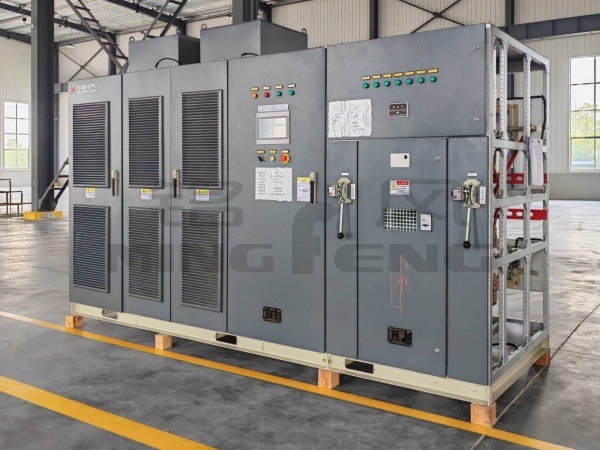
The fan is equipped with a frequency converter (Variable Frequency Drive, VFD), which is specially adapted to the square torque load of the fan. By changing the power supply frequency to adjust the mo
01On site installation and debugging of equipment
02Regular follow-up visits
The fan is equipped with a frequency converter (Variable Frequency Drive, VFD), which is specially adapted to the square torque load of the fan. By changing the power supply frequency to adjust the motor speed, it replaces the throttle baffle for throttling, achieving continuous adjustment of air volume and pressure. It is the core electronic control component for dust removal, induced draft, and exhaust fans.
1. Core role
1. Energy saving and consumption reduction (greatest advantage) The power of a fan is directly proportional to the cube of its speed. Reducing the speed can significantly save electricity. Compared to pressure regulation through baffles, it can save 20% to 45% of electricity, making it suitable for conditions with large load fluctuations and long-term continuous operation.
2. Stepless speed regulation and precise airflow control: 0~50Hz continuously adjustable, with a built-in PID closed-loop system, automatically adjusting airflow according to on-site pressure/dust concentration, eliminating the need for manual adjustment of air doors.
3. Soft start and soft stop: Slowly increase speed, eliminate the impact current of power frequency start-up, protect the motor, coupling, and impeller, reduce vibration, and minimize bearing damage.
4. Improved equipment protection: Equipped with overcurrent, overload, overvoltage, undervoltage, phase loss, and overheat protection, it automatically stops and alarms in case of a fault; supports multi-speed control and sleep wake-up.
5. Remote communication: Protocols such as Modbus are integrated into PLC/DCS to enable remote control from a central control system, suitable for automated production lines.
⚠️Note: For fans that operate at full capacity and constant air volume all year round, the energy-saving effect of variable frequency is not significant.
II. Classification
1. Dedicated frequency converters for fan and water pump applications (low voltage 380V, mainstream in the industry) feature a built-in square torque V/F curve optimized for centrifugal fans. With moderate cost, they are the preferred choice for dust removal, induced draft fans, and ventilation fans (ACS510, G120XA, dedicated models for domestic fans).
2. High-voltage frequency converters (6kV/10kV) are used for high-power large boilers and kiln fans, which are costly and are mostly used in power plants and metallurgy.
3. Explosion-proof frequency conversion cabinet: For use in chemical and spray painting environments prone to flammability and explosiveness, it features an explosion-proof enclosure that meets Ex explosion-proof requirements.
III. Key parameters for model selection
1. Rated power and rated current of the motor (priority should be given to the current, not just the power), with the rated current of the frequency converter being ≥ 1.1 to 1.2 times the motor current, with a reserved margin
2. Voltage level: Conventional three-phase 380V
3. Operating conditions: Indoor/Dust/High temperature/Explosion-proof
4. Control requirements: local panel/remote 4-20mA signal, whether to connect to DCS
5. Accessories: Incoming line reactor (to suppress harmonics), output reactor (for long-line motors)
6. For low-frequency long-term operation, it is recommended to use an independent strong-cooling variable-frequency motor; ordinary motors tend to overheat due to poor heat dissipation from their built-in fans at low speeds.
IV. Installation points
1. The frequency converter control cabinet should be placed separately, away from dust, high temperatures, and humidity. The ambient temperature should be between 0 and 40℃, with good ventilation. It should not be placed closely to the fan casing.
2. It is strictly prohibited to connect the input and output cables reversely, as this will directly burn out the module; ensure reliable grounding.
3. If the motor cable is too long (>100 meters), an output reactor must be installed to suppress peak voltage and protect the motor insulation.
4. Install dust-proof filters on the frequency conversion cabinets in the dust workshop and clean them regularly; use explosion-proof cabinets in explosion-proof scenarios.
5. During debugging, set the dedicated V/F curve for the fan, and do not use constant torque parameters.
V. Common faults
Overcurrent alarm: damaged motor insulation, short-circuited wiring, sudden load change, incorrect parameter setting
Overheat alarm: dust accumulation inside the cabinet, damaged cooling fan, and excessively high ambient temperature
Abnormal motor noise: Inappropriate carrier frequency, missing output reactor
Harmonic interference: affecting nearby instruments, which can be solved by installing an incoming line reactor
You can also contact us for more models and support customization

You only need one phone call
Leave the rest to us

The sales team will have a detailed discussion with you
Tell us your needs

Engineers based on your requirements
Provide a reasonable solution for the demand

We will do it within a reasonable time frame
Complete with quality and quantity assurance

Installation team on-site installation
Debugging until stable production

Any problems in the later stage are welcome
Contact the after-sales engineer
You can also contact us for more models and support customization
You only need one phone call. Leave the rest to us
The sales team will have a detailed discussion with you and tell us your needs
Engineers provide reasonable solutions based on your needs
We will complete it with high quality and quantity within a reasonable time
Installation team on-site installation, debugging until stable production
If there are any problems in the later stage, you can contact the after-sales engineer
 13806436798
Mobile