Industrial fan | Smart fan Overall solution service provider

Industrial fan | Smart fan Overall solution service provider


 13806436798
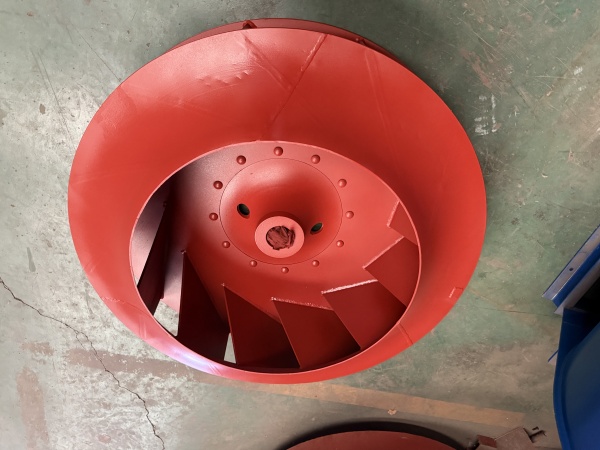
The impeller is the heart of a fan. The motor drives the impeller to rotate, converting mechanical energy into pressure energy and kinetic energy of gas, directly determining the fan's air volume,
01On site installation and debugging of equipment
02Regular follow-up visits
The impeller is the heart of a fan. The motor drives the impeller to rotate, converting mechanical energy into pressure energy and kinetic energy of gas, directly determining the fan's air volume, air pressure, efficiency, noise, and operational stability.
1、 Basic structure (centrifugal impeller)
Wheel hub (shaft disc): connects the main shaft and transmits torque
Rear disk (disc): the substrate that carries the blades
Blade: Doing work on gas, blade profile is key to performance
Front plate (wheel cover): Seal the blade flow channel to reduce gas backflow and leakage
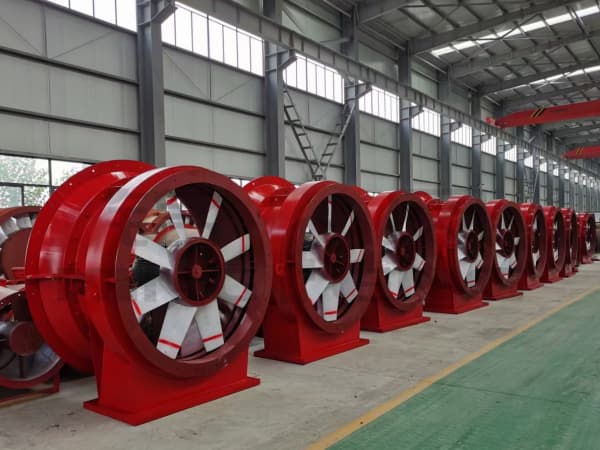
Simplified Axial Flow Impeller Structure: Hub+Several Blades, Some Blades Angle Adjustable
2、 Three types of blades for centrifugal impellers
1. Backward bending (backward) impeller | The bending direction of industrial mainstream blades is opposite to the rotation direction; Wing shaped/flat plate rear bend.
Advantages: high aerodynamic efficiency, stable operation, low vibration, and low noise;
Disadvantages: Low wind pressure at the same rotational speed; 👉 Applicable: dust removal, exhaust gas transportation, large induced draft fans, long-term continuous operation conditions.
2. Forward bending (forward/multi wing) impeller blades have a bending direction and rotation direction, and a large number of blades.
Advantages: High wind pressure and compact size for the same size;
Disadvantages: Low efficiency, easy to accumulate dust; 👉 Applicable: air conditioning units, ventilation purification, small equipment internal circulation fans.
3. Radial impeller (straight blade) blades extend outward along a radial straight line.
Advantages: Simple structure, wear-resistant, and not easily clogged with dust;
Disadvantages: Poor efficiency, excessive noise; 👉 Applicable: high dust, particulate media, coal powder, sand and gravel flue gas.
Open and close according to structure: closed (with complete front and rear panels, highest efficiency, clean gas), semi open (with only the rear panel and a small amount of dust), open (without front and rear panels, high dust/fiber media)
3、 Axial flow impeller
Similar to a propeller, the airflow enters and exits along the axis of rotation, and the blade angle can be adjusted to change the air volume and pressure on site. Large air volume and small volume; Low wind pressure; Applicable: Factory ventilation, cooling tower, fire smoke exhaust, pipeline direct discharge.
4、 Common materials
Q235/Q345 carbon steel: universal room temperature air, low cost; Dust working conditions can be treated with tungsten carbide wear-resistant spraying
304/316L stainless steel: damp, acid alkali corrosion, high temperature waste gas from food and pharmaceutical industries
Aluminum alloy: Lightweight small fan, clean air, not resistant to wear and high temperature
Fiberglass FRP: Strong acid and alkali waste gas, temperature generally ≤ 120 ℃
Titanium alloy: Strong corrosion in high-end working conditions, high cost
5、 Key processes and acceptance points
Cutting: Laser cutting to ensure blade consistency
Welding: Full welding+stress relief to prevent deformation and cracking during high-speed rotation
Dynamic balancing: It must be done before leaving the factory (commonly G4.0 grade). Unbalance can cause severe vibration, bearing damage, and complete machine scrapping
Anti corrosion and wear-resistant: spray painting, galvanizing, wear-resistant coating
6、 Common faults
Ash accumulation: blade scaling, disruption of dynamic balance, and soaring vibration
Wear and tear: Dust erosion, thinning of blades, severe wear and tear
Corrosion: Corrosion caused by acidic water vapor, resulting in pitting and cracking
Fatigue cracking: Long term alternating stress, weld or blade root fracture
You can also contact us for more models and support customization

You only need one phone call
Leave the rest to us

The sales team will have a detailed discussion with you
Tell us your needs

Engineers based on your requirements
Provide a reasonable solution for the demand

We will do it within a reasonable time frame
Complete with quality and quantity assurance

Installation team on-site installation
Debugging until stable production

Any problems in the later stage are welcome
Contact the after-sales engineer
You can also contact us for more models and support customization
You only need one phone call. Leave the rest to us
The sales team will have a detailed discussion with you and tell us your needs
Engineers provide reasonable solutions based on your needs
We will complete it with high quality and quantity within a reasonable time
Installation team on-site installation, debugging until stable production
If there are any problems in the later stage, you can contact the after-sales engineer
 13806436798
Mobile