Industrial fan | Smart fan Overall solution service provider

Industrial fan | Smart fan Overall solution service provider


 13806436798
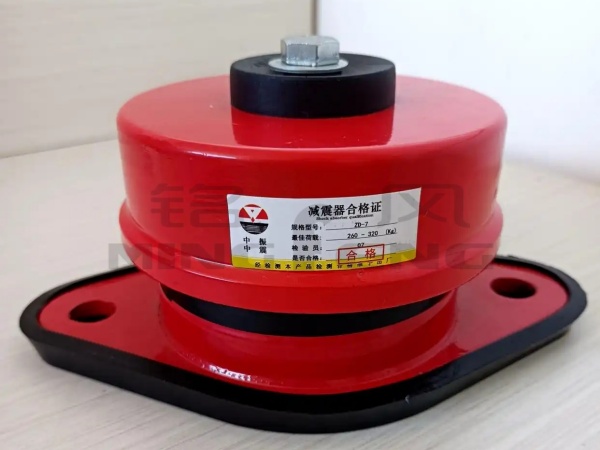
The fan shock absorber (fan vibration isolator) is installed between the fan base and the foundation floor, and is a core component for vibration isolation in the entire fan system. It isolates the vi
01On site installation and debugging of equipment
02Regular follow-up visits
The fan shock absorber (fan vibration isolator) is installed between the fan base and the foundation floor, and is a core component for vibration isolation in the entire fan system. It isolates the vibration from the fan operation from being transmitted to the ground and building foundation, reducing plant vibration and solid-borne sound transmission. It is a commonly used accessory for noise reduction in environmental impact assessments.
1. Core role
1. Vibration isolation and reduction: Reduce the vibration generated by the operation of the fan, prevent the vibration from being transmitted to the ground and steel frame platform, and avoid the vibration being conducted to the pipeline and walls, which may cause secondary noise.
2. Protecting supporting components: Reduce the alternating stress on soft connections, couplings, bearing housings, and anchor bolts caused by vibration, lower the probability of bearing damage, weld cracking, and bolt loosening, and extend the overall machine lifespan.
3. Noise reduction: Reduce solid-borne sound transmission and combine with a silencer to achieve comprehensive noise reduction.
4. Buffering and shock absorption: Absorb the start-stop impact of the fan to reduce the risk of resonance.
⚠️Distinction: The shock absorber serves as a support base, while the inlet and outlet flexible connections serve to isolate vibrations between the pipeline and the fan. The two are used together to form a complete vibration isolation system.
II. Common types of wind turbines
1. Spring shock absorber (damping spring shock absorber, preferred choice for industrial fans) - featuring an integrated spring and rubber damping structure, it boasts high load capacity and excellent low-frequency vibration isolation. With high vibration isolation efficiency, it is suitable for heavy-duty centrifugal fans and induced draft fans. However, due to its relatively large size, attention should be paid to rust prevention. 👉 Recommended for large and medium-sized fans on cement floors or steel frame foundations.
2. Rubber shock pad/rubber shock absorber: It is a single piece of rubber or rubber support, featuring a simple structure, easy installation, and low cost. It is lightweight and easy to install; however, it has weak low-frequency vibration damping, is prone to aging at high temperatures, and has limited load-bearing capacity. 👉 Small fans, low-speed light-load ventilators.
3. Air cushion shock absorbers (air shock absorbers) have the best vibration damping effect but are expensive. 👉 They are rarely used in ordinary industrial fans, but are preferred for high-precision equipment and laboratory equipment with extremely strict vibration requirements.
III. Material
Spring: 65Mn spring steel, surface painted/galvanized for rust prevention
Damping rubber: nitrile rubber, resistant to aging
Shell: Q235 carbon steel
IV. Key parameters for model selection
1. Total weight of the complete wind turbine (turbine + motor + base)
2. Number of shock absorbers (generally 4, 6 or 8 for large wind turbines), with a single shock absorber load equal to the total weight multiplied by a safety margin of 1.2
3. Foundation type: Concrete floor / Steel frame platform
4. Fan speed (key point! For low-speed fans, spring shock absorbers are preferred)
5. Is there a requirement for lateral displacement, and is a limiting device necessary
6. Environment: humid, high temperature, dusty environment
V. Installation Key Points
1. The shock absorbers are evenly stressed, and all shock absorbers are at the same height to avoid uneven loading.
2. The fan base must be an integral shared base (common chassis), with the fan and motor mounted on the same base for optimal vibration damping effect.
3. The shock absorber should be placed as close as possible to the main beam of the base, and should not be suspended in the air.
4. Equip with supporting inlet and outlet flexible connections. Pipes cannot be rigidly connected, otherwise vibration will "short circuit" through the pipes, rendering the shock absorption ineffective.
5. For shock absorbers with limit stops, the limit bolts should not bear against the base during normal operation, and only serve as protection during earthquakes and impacts.
6. After installation, do not lock the anchor bolts tightly and press down on the shock absorber spring.
VI. Common faults
1. Shock absorption failure: spring is compressed to death (over-sized selection), rubber is aged and cracked
2. Fan shaking: uneven stress on the shock absorber, lack of a limiting device
3. Spring corrosion: No anti-corrosion measures taken in humid environment
4. High-frequency pitfall: Installing only shock absorbers but connecting the pipes rigidly will still allow vibration to be transmitted, making the installation futile.
You can also contact us for more models and support customization

You only need one phone call
Leave the rest to us

The sales team will have a detailed discussion with you
Tell us your needs

Engineers based on your requirements
Provide a reasonable solution for the demand

We will do it within a reasonable time frame
Complete with quality and quantity assurance

Installation team on-site installation
Debugging until stable production

Any problems in the later stage are welcome
Contact the after-sales engineer
You can also contact us for more models and support customization
You only need one phone call. Leave the rest to us
The sales team will have a detailed discussion with you and tell us your needs
Engineers provide reasonable solutions based on your needs
We will complete it with high quality and quantity within a reasonable time
Installation team on-site installation, debugging until stable production
If there are any problems in the later stage, you can contact the after-sales engineer
 13806436798
Mobile