
Industrial Fan



 +86-13806436611
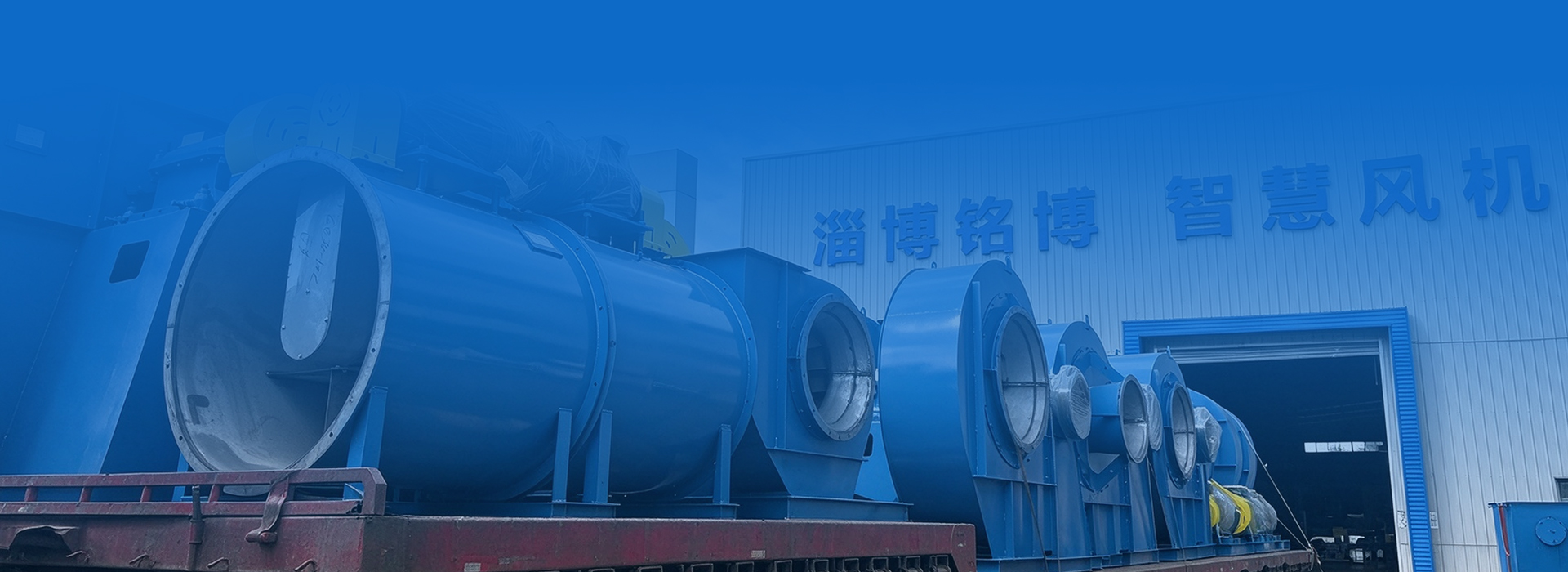
In modern industrial manufacturing, commercial building HVAC, and high-density data centers, efficient air flow and thermal management systems are crucial for maintaining stable equipment operation. Among various ventilation devices, centrifugal fans have become an indispensable core component due to their excellent ability to overcome high system resistance and provide stable high-pressure airflow
The working principle of a centrifugal fan
To understand why centrifugal fans can perform well in complex ventilation duct networks, we need to first understand their core physical mechanisms. A centrifugal fan mainly consists of a drive motor, an impeller, a volute, and other components.
When air enters the rapidly rotating impeller in a direction parallel to the motor shaft (axial direction), the radially arranged blades capture this air and violently accelerate it outward (radially) using strong centrifugal force. This process not only causes a 90-degree deflection in the direction of airflow movement but also imparts extremely high kinetic energy to the air. Subsequently, the high-speed airflow enters the gradually expanding volute, where the fluid velocity decreases, and the kinetic energy is efficiently converted into static pressure. It is this ability to generate high static pressure that enables centrifugal fans to easily push air through high-resistance systems such as long pipelines and high-efficiency filters.
Core types of centrifugal fans
Different application environments have distinct fluid mechanics requirements for air volume, wind pressure, and noise. Relying on its excellent mold development and fluid simulation capabilities, LONGWELL offers you the following mainstream centrifugal fan products:
1. Backward Curved Centrifugal Fan
The blades of a backward-curved centrifugal fan curve in the opposite direction to the rotation of the impeller. This aerodynamic design is widely recognized as the most energy-efficient topology within the centrifugal fan family.
Performance Advantages: It not only provides extremely high and stable static pressure output, but also possesses the "no overload" power characteristic that engineers highly value. This means that regardless of any sudden drop in system resistance, the motor will not burn out due to overload, providing a natural safety guarantee
Forward Curved Centrifugal Fan
The fan is often referred to as the "squirrel cage" fan, where the blades of the forward-curved centrifugal fan are curved in the same direction as the rotation.
Performance Advantages: This type of fan is specifically designed for delivering large volumes of air under low system resistance. Its compact impeller structure enables it to deliver substantial airflow at extremely low rotational speeds, which directly results in exceptionally quiet performance.
· Application Scenario: Ideal for commercial and residential environments that are sensitive to noise and have limited space. The dual-inlet forward-facing centrifugal fan, crafted with a high-quality galvanized metal casing and precision ball bearings, has been widely applied in floor heating systems, air purifiers, and precision electronic equipment cooling
 +86-13806436611