Industrial fan | Smart fan Overall solution service provider

Industrial fan | Smart fan Overall solution service provider


 13806436798
Material conveying fan, also known as pneumatic conveying fan, relies on the kinetic energy of airflow to drive powder and granular materials to be conveyed along pipelines. It is widely used for clos
01On site installation and debugging of equipment
02Regular follow-up visits
Material conveying fan, also known as pneumatic conveying fan, relies on the kinetic energy of airflow to drive powder and granular materials to be conveyed along pipelines. It is widely used for closed conveying of powder, grain, mineral powder, plastic particles, etc., to prevent dust. It is divided into two categories: positive pressure conveying and negative pressure suction conveying.
1、 Classification and Usage
1. High pressure centrifugal material conveying fans (9-19, 9-26 series) are the most commonly used for industrial powder conveying, with high pressure and suitable for medium to short distance, high concentration powder positive pressure conveying. Such as limestone powder, carbon black, fly ash, and plastic particles.
2. Roots blower has a constant flow rate and stable pressure, suitable for long-distance pneumatic conveying, and is widely used for conveying cement, grain, and mineral powder.
3. The vortex high-pressure fan is small, clean, and low wear, suitable for small vacuum feeding, food powder, and pharmaceutical raw material transportation, but not suitable for hard coarse particles.
Two conveying modes
Positive pressure conveying: The fan is at the front end, and high-pressure airflow pushes the material, suitable for long-distance and large conveying capacity; High requirements for impeller wear.
Negative pressure suction: The fan is at the end, and the negative pressure inside the pipeline sucks in the material; The material first passes through the separator, and the gas entering the fan is relatively clean, with minimal wear on the fan.
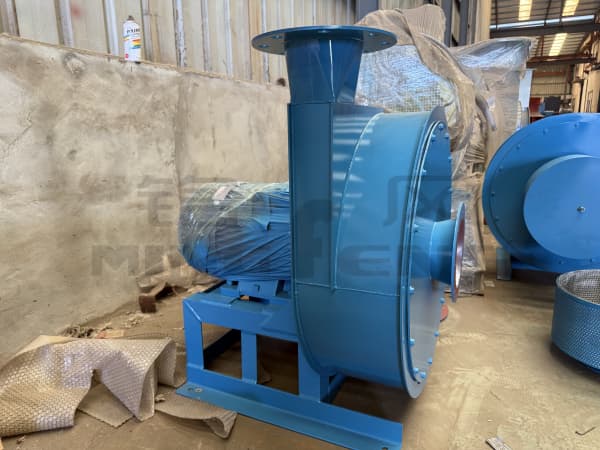
2、 Whole machine structure (9-19/9-26 centrifugal type)
Thickened snail shell casing+wear-resistant impeller+air inlet+heavy-duty bearing box+common base
Impeller: forward curved blades; Hard particle working condition tungsten carbide surfacing, fine powder optional stainless steel impeller
Shell: thickened steel plate, wear-resistant lining plate can be installed in the flushing area
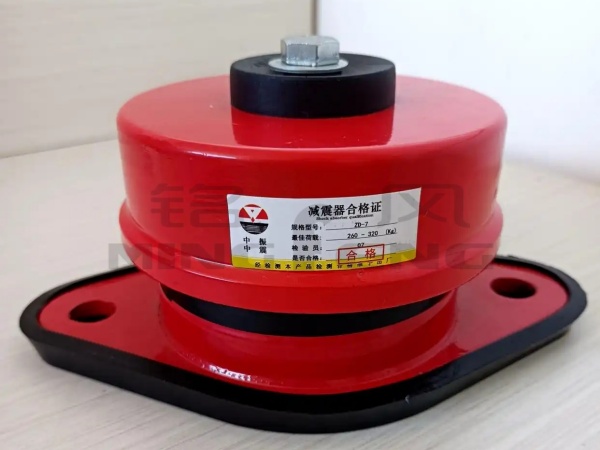
Sealing: Maze+dust-proof seal, preventing dust from entering the bearing and damaging it. Lubrication kit: wear-resistant soft connection, spring shock absorber, imported air damper, muffler, variable frequency control cabinet, pipeline protection filter
3、 Core Features
1. High wind pressure overcomes the resistance caused by pipeline bends and diameter changes, ensuring stable material transportation
2. Wear resistant and reinforced design to resist continuous particle erosion; Can run continuously for a long time
3. Sealed conveying, no dust overflow, improves workshop environment, meets environmental protection requirements
4. Variable frequency adjustable air volume and pressure, suitable for different conveying volumes and materials
5. There are multiple models to choose from, ranging from light food powder to coarse ore particles that can be matched
4、 Applicable materials and industries
Fly ash, limestone powder, cement raw materials, carbon black, grains, wheat, corn, plastic pellets, mineral powder, talc powder, activated carbon.
5、 Material selection
Lightweight fine powder: Q235 carbon steel impeller
Hard mineral powder, sand and gravel particles: Q345+tungsten carbide overlay welding
Corrosive powder: 304/316L stainless steel
6、 Key parameters for selection
1. Conveying method: positive pressure conveying/negative pressure suction conveying
2. Material type: Particle hardness, particle size, specific gravity
3. Conveying capacity, conveying distance, number of bends (the more bends there are, the greater the resistance)
4. Airflow, total pressure
5. Medium temperature, presence of water vapor, corrosiveness
6. Is it explosion-proof (for combustible powders such as coal powder and aluminum powder)
7、 Installation points
1. It is recommended to add unloading and buffering devices at the front end of positive pressure conveying to reduce the direct impact of large particles on the impeller
2. Install a cyclone/bag separator in front of the fan for negative pressure conveying to purify the gas as much as possible and protect the fan
3. Wear resistant non-metallic soft connections for import and export, compensating for displacement and isolating vibration
4. Pipeline independent support, pipeline weight cannot press fan flange
5. Install a protective net at the air inlet to prevent large debris from entering the fan
6. The whole machine is equipped with anti-static grounding for combustible powder working conditions, and explosion-proof motors are selected
8、 Common faults
1. Particle erosion, thinning or even perforation of blade wear, and soaring vibration
2. Fine powder adheres to the impeller, causing uneven dust accumulation and disrupting dynamic balance
3. Dust enters the bearing box, lubricating grease fails, and the bearing heats up and is damaged
4. Pipeline blockage, abnormal pressure rise, fan overload
5. Sealing wear and dust leakage
You can also contact us for more models and support customization

You only need one phone call
Leave the rest to us

The sales team will have a detailed discussion with you
Tell us your needs

Engineers based on your requirements
Provide a reasonable solution for the demand

We will do it within a reasonable time frame
Complete with quality and quantity assurance

Installation team on-site installation
Debugging until stable production

Any problems in the later stage are welcome
Contact the after-sales engineer
You can also contact us for more models and support customization
You only need one phone call. Leave the rest to us
The sales team will have a detailed discussion with you and tell us your needs
Engineers provide reasonable solutions based on your needs
We will complete it with high quality and quantity within a reasonable time
Installation team on-site installation, debugging until stable production
If there are any problems in the later stage, you can contact the after-sales engineer
 13806436798
Mobile